CVV

What is the CVV code of a card?

The CVV (Card Verification Value), CVC (Card Verification Code) or dynamic security code is a 3- or 4-digit number assigned to each card, located on the back of the card. Its purpose is essential: protecting card transactions and preventing fraud, especially in online purchases. The CVV acts as an extra layer of security to confirm that the person making the payment physically has the card.
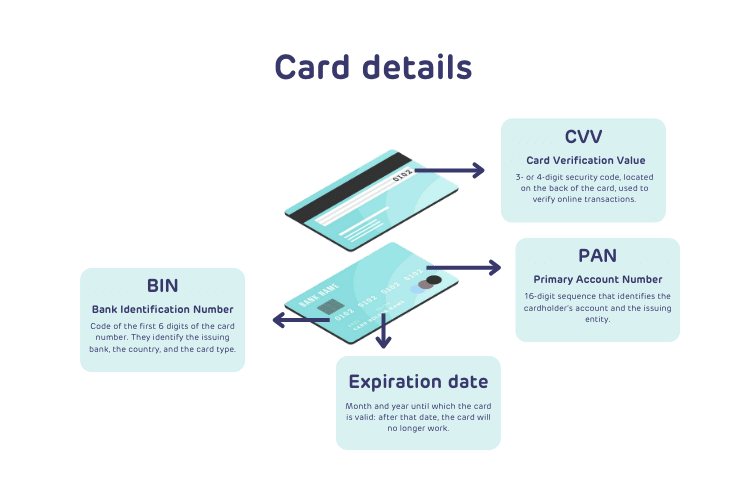
Card elements.

Types of CVV codes

There are mainly two types of verification codes:

  • Card-present transactions: The card is physically present. The card’s security code is stored in the magnetic stripe and, when the card is inserted into the POS terminal, the transaction is authorized.
  • Card-not-present transactions: The card is not physically present. In this case, the CVV must be entered manually to complete the transaction. It is printed on the back of the card. There is also the possibility of a dynamic CVV, which is not printed on the physical card but constantly changes and must be retrieved from online banking.

Temas destacados

Explora los conceptos más relevantes para impulsar tu negocio online.

PAN

What is the PAN or card number? The PAN (Personal Account Number) refers to the number printed on a debit, credit, virtual or prepaid card.
See more
What is the PCI DSS standard? The Payment Card Industry Data Security Standard (PCI DSS) is a security standard designed to protect cardholder data and other sensitive authentication information during processing, storage and/or transmission.
See more
What is tokenization? Tokenization is the process of protecting sensitive data by replacing it with tokens, which are non-sensitive equivalents. A token does not contain real value or meaning; it is simply an identifier that allows those sensitive data points to be referenced securely.
See more
Newsletter

No te pierdas ninguna novedad

Suscríbete a nuestra newsletter y recibe las últimas noticias, novedades de producto y tendencias fintech directamente en tu correo.

    PaynoPain
    Privacy Overview

    This website uses cookies so that we can provide you with the best user experience possible. Cookie information is stored in your browser and performs functions such as recognising you when you return to our website and helping our team to understand which sections of the website you find most interesting and useful.