From mobile wallets to cash: how travelers pay on holiday
Travelling involves making countless decisions. One of the most important, although it often goes unnoticed, is how to pay. Every summer, millions of Spaniards book hotels, buy tickets, pay for activities and spend money in restaurants and shops during their holidays. And although digital payments continue to gain ground, cash still plays an important role when travelling.
According to the study Payment Methods: The Final Decision 2026, conducted by PaynoPain, Spaniards combine different payment methods to minimise risks while on holiday. These payment habits have a direct impact on the tourism sector, as having a virtual POS, a payment gateway or a card terminal capable of accepting different payment methods can make the difference between securing a sale or losing a booking.
Below, we analyse how travelers pay during their holidays and what these habits mean for hotels, tourist accommodation providers and other businesses in the sector.
How do travelers pay during their holidays?
Card, digital wallets or cash: how travelers pay while on holiday
The data reveals a hybrid payment behaviour in which cards, digital wallets and cash coexist, influenced by the actual payment experience, the infrastructure available at the destination and users’ perception of risk. Let’s take a closer look.

According to the survey, cards are the most commonly used payment method during holidays (58%), while mobile payments and digital wallets such as Apple Pay and Google Pay rank second (24.10%). Cash comes third (17.75%). Although it has lost prominence as the primary payment method, it continues to play a structural role throughout the trip.
This combination shows that consumers no longer rely on a single payment method. Instead, they choose different options depending on the business, the country or the type of purchase.
For hotels, restaurants and tourism businesses, these findings highlight the importance of accepting multiple payment methods both on-site and for online bookings.
Cash: from primary payment method to backup option
One of the study’s most significant findings is that 92% of travellers carry cash when travelling abroad, demonstrating that its role has changed. It is no longer the primary payment method but rather a contingency tool.

The results are clearly distributed:
- 43.65% always carry cash when travelling.
- 48.37% carry cash, but only in small amounts.
- 7.98% do not carry cash when travelling abroad.
This confirms that cash continues to act as a financial safety net in case of unexpected situations rather than as a preferred payment method. In practice, it serves as a backup in the event of card failures, lack of acceptance or other issues abroad.
Travellers no longer rely on a single payment method
Cards remain the main payment method, but digital wallets and cash now fulfil complementary roles. This combination reflects a strategy aimed at reducing risks and adapting to the characteristics of each destination. For tourism businesses, this trend confirms the need to provide a flexible payment infrastructure capable of accepting multiple payment methods both online and at the point of sale.
International payments: the main challenges when paying abroad
What problems do travellers encounter when paying abroad?
Although we are becoming increasingly digital, the payment experience still presents challenges when travelling abroad. These are some of the most common issues:

- 57.49% of travellers consider currency exchange and payment conversion fees to be the main problem.
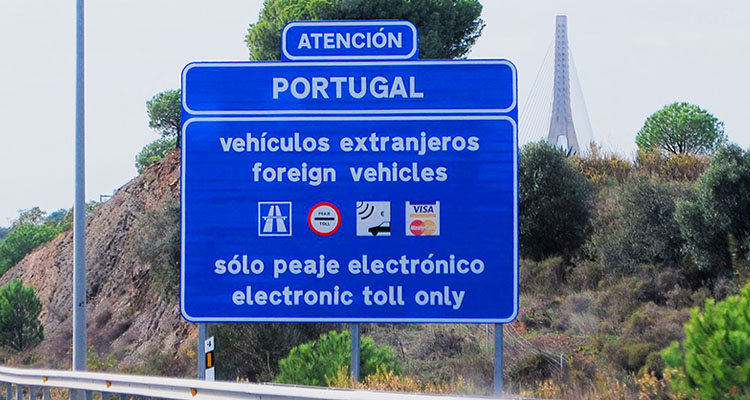
- 21.34% say that their cards do not work abroad (in some countries, Visa and Mastercard cards may not work due to compatibility issues or sanctions).
- 15.64% state that their preferred payment method is not always accepted.
- 15.15% admit that they try to avoid carrying cash, but sometimes it is unavoidable.
- Only 25.57% say they have never experienced payment-related problems during international trips.
These figures show that there is still considerable room for improvement. Major challenges remain regarding interoperability between payment systems, acceptance of certain payment methods and the costs associated with international payments.
Payment infrastructure: a key factor in increasing conversion within the tourism sector
Virtual POS, payment gateway and card terminals: improving the payment experience
The study’s findings demonstrate that the payment experience has a direct impact on conversion. In fact, 42.02% of travellers say they have abandoned a purchase because the business did not accept their usual payment method.
For hotels, tourist accommodation providers, restaurants and travel agencies, this highlights the importance of having a payment infrastructure capable of adapting to each customer’s preferences, both for online bookings and in-person payments.
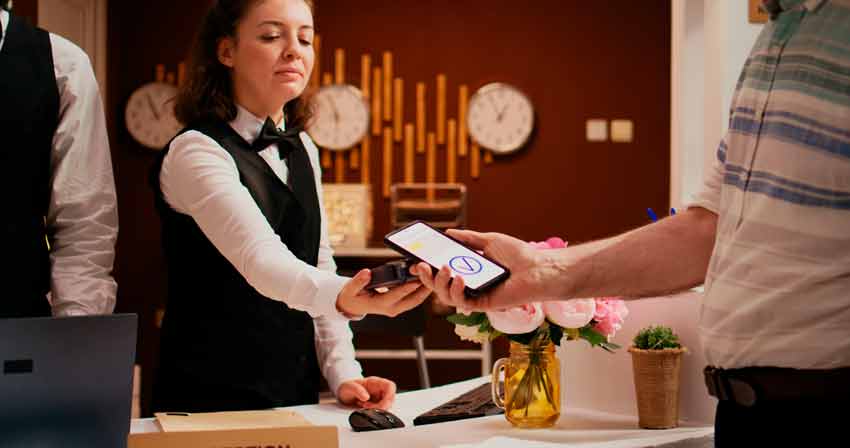
Having a virtual POS for managing bookings, a payment gateway that integrates multiple payment methods and a card terminal ready to accept cards, contactless payments and digital wallets helps reduce friction during checkout, facilitates international payments and delivers a smoother payment experience.
At a time when travellers expect to use the same payment method throughout the entire customer journey—from booking to check-out—having a flexible payment solution is no longer simply a competitive advantage. It has become an essential factor in improving conversion rates and reducing lost sales.
Payment solutions for hotels, tourist accommodation providers and businesses
How to adapt payment systems to travellers’ changing habits
In the context of international tourism, payment is no longer simply the final stage of the purchasing process. It has become a key factor influencing both conversion and the overall traveller experience.
At PaynoPain, we help hotels, holiday apartments, campsites, travel agencies, restaurants and other businesses optimise their payment processes through solutions that integrate virtual POS systems, payment gateways, physical card terminals and multiple payment methods within a single platform. If you would like more information, don’t hesitate to get in touch with us.


At PaynoPain, we collaborate with companies that share our vision of innovation, quality, and technological excellence. If you offer complementary solutions or want to distribute our products, together we can go further. We offer you support, training, and real opportunities for joint growth, with global impact.